 Supreme
Keep the miles coming. Lose the niggle.
It started as a tight calf on long runs. Now it's there from the first mile and the race is six weeks away. You've rolled, stretched and rested. Runners don't need to stop. They need the thing that keeps flaring treated at the source.
Nick Monczakowski 4.9 from 74 Google reviews · 13+ years
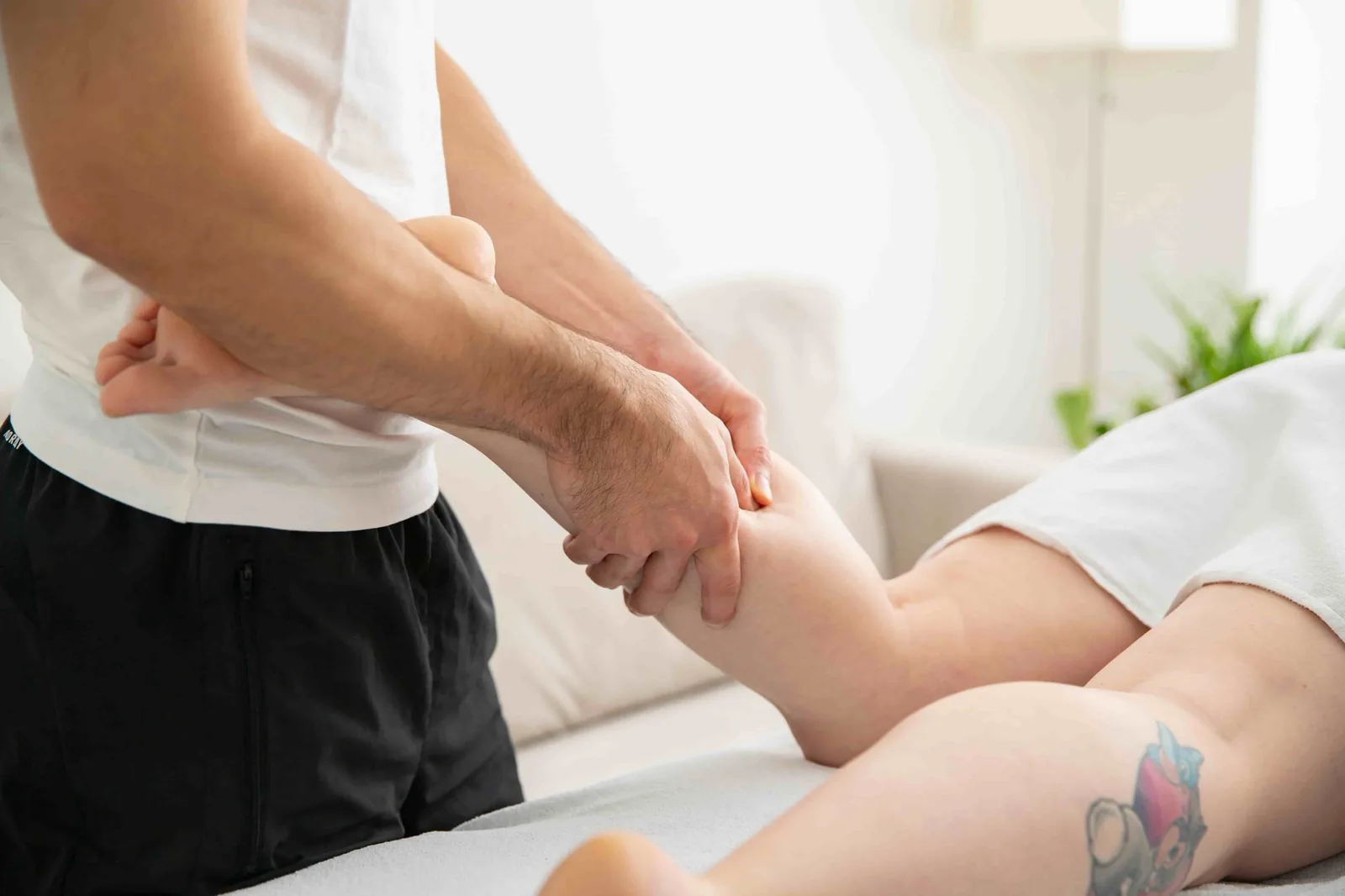
The injuries that stop runs.
When to book around a race.
Timing matters as much as the treatment. A rough guide for a half or full marathon:
Deeper work
The best window for a proper session. Time for any soreness to settle before race day.
A lighter flush
Optional, if you're used to massage. Loosens you up without leaving you sore.
Nothing new
No deep work, no new treatments. Trust the training.
Recovery
Once the worst soreness eases. Helps you get back to running sooner.
It's rarely the run. It's the build-up.
Too much, too soon.
Mileage, hills or speed added faster than your tissue can adapt. It's the most common story Nick hears.
Tightness adds up.
Every long run leaves a little behind. Without clearing it, calves, hamstrings and hips get tighter week by week.
The weak link gives first.
Sleepy glutes or a stiff ankle push the load somewhere else. That's usually where the pain shows up.
Running myths. Busted.
“I'll just run through it.”
Tap to flip →Sometimes fine. If it's worse the next morning or changes how you run, it needs looking at.
“Massage is a treat for after the race.”
Tap to flip →It does most good during the build, catching niggles before they cost you weeks.
“I need to stop running to get better.”
Tap to flip →Usually you don't. Adjusting the load while the cause is treated keeps you running.
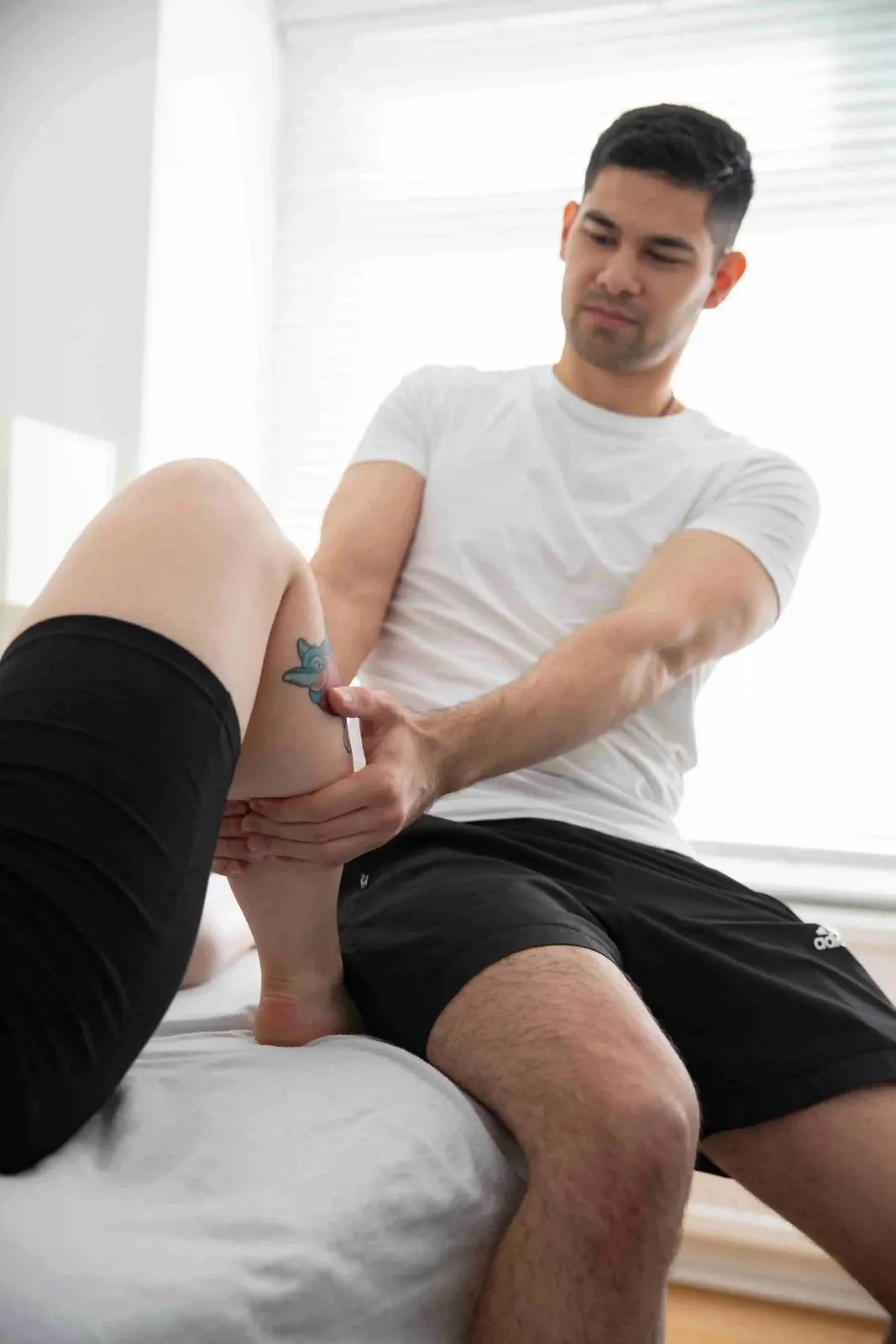
Runners, treated properly.
Nick has treated runners for over 13 years, from first-time half marathoners to club runners chasing a PB. He sees members of local clubs including Raynes Park Harriers, Kingston AC, Wimbledon Windmilers and Thames Hare & Hounds, often to keep a training block on track rather than fix an injury.
Also RockTape certified, so taping is there if it helps you keep running. More about Nick →
- BTEC Level 5Sports & remedial massage
- MSMA memberSports Massage Association
- Brandon RaynorDeep tissue certified
- RockTape certifiedKinesiology taping
- Fully insuredIndemnity & public liability
- Former tennis coach8 years on court
Previously Nuffield Health · Google HQ London · The Ned · Ewell Chiropractic
Finish lines. In their words.
“I'm convinced Nick is half sports therapist, half magician! I went to see Nick having badly injured my right calf 4 weeks out from the Copenhagen marathon… finished in 3h 6mins.”
Charlie · Marathon runner“I visited Nick after experiencing tight painful calves during my marathon training… I was pleased to complete my first marathon on Sunday, starting on legs that felt fresh after weeks of hard training.”
Anna · Marathon runner“At 42 I couldn't jog without pain. With a tailored treatment plan Nick changed all of that.”
Matt · RunnerCheaper than a missed race.
When it breaks down, everything goes on hold. The runs you love. The game with your mates. Holidays become something to get through, not enjoy. And somewhere along the way, you get shorter with the people closest to you.
First session · 60 min
Assessment, treatment and a plan. The first step to getting your life back.
Book first session60 minutes
Ongoing issues, recovery or maintenance.
90 minutes
Several problem areas, or a deeper session.
Need a few sessions? Book a 5-pack and every 60-minute session is £80, the same as your first. See packages →
No wasted money. Describe it first. If massage isn't what you need, Nick will tell you before you book.
Before you book as a runner.
When should I book a massage before a race?
4 to 7 days before a big race is ideal for deeper work, giving any soreness time to clear. A lighter session 2 to 3 days out can help if you're used to massage. Avoid deep work in the final 48 hours.
How often should I get sports massage during marathon training?
Every 2 to 4 weeks through a training block, more often during peak mileage. The aim is to clear built-up tension and catch niggles while they're still niggles.
Can you treat my injury while I keep training?
Usually, yes. For most running injuries complete rest isn't needed. Nick will help you adjust your running so you keep as much training as you safely can while the problem is treated.
When should I book after a race?
48 to 72 hours after a marathon or half is a good time for a recovery session, once the worst of the soreness has eased. It helps you get back to training sooner.
How long are sessions and what do they cost?
Sessions are 60 or 90 minutes. Your first session is £80 (usually £100). After that it's £100 for 60 minutes or £150 for 90 minutes. 90 minutes suits anyone with several problem areas. Packages of 3 or 5 sessions, valid for 6 weeks, bring the price per session down. Full details on the rates page.
How do I book?
Use the booking form on this page, WhatsApp or call Nick on 07517 335 358. You'll get a personal reply from Nick, usually the same day. Tell him which days and times suit you and he'll offer the nearest slot.
Also for runners.
Treat it before it costs you the race.
- £80 first session, assessment included
- Mon–Fri 11am–7pm
- Near New Malden station · free street parking
- Personal reply from Nick, usually same day
“He helped keep me loose and bouncy before some endurance sporting events.”